Why High-Achieving People Attract Emotionally Unavailable Partners
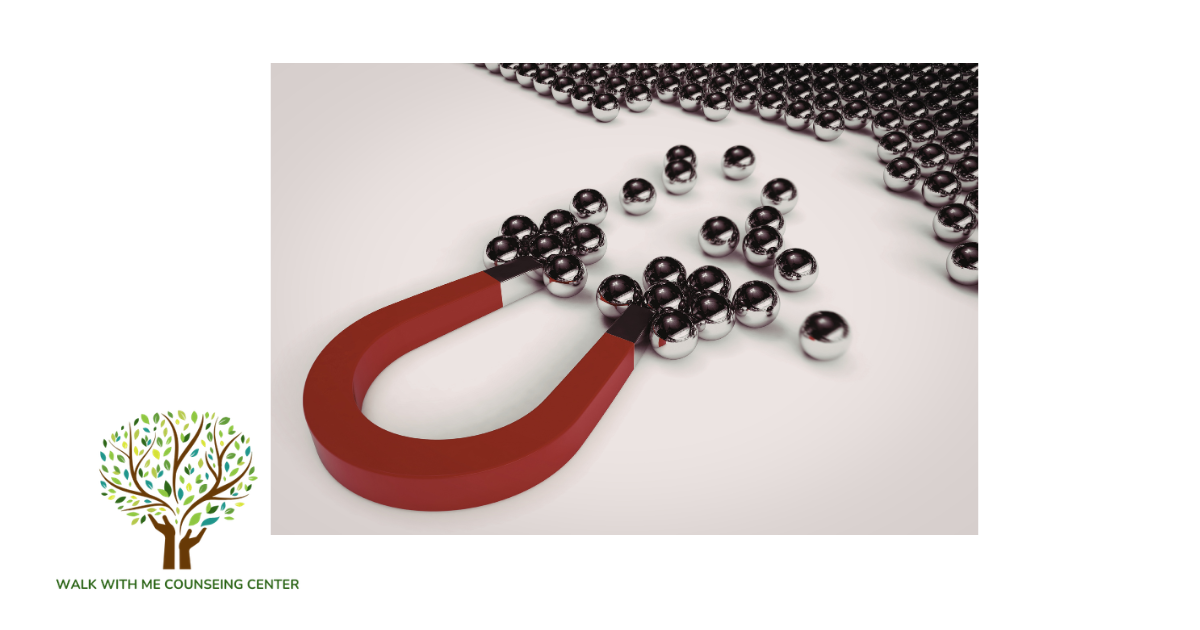
On paper, your life looks solid. Career, responsibilities, friendships — you manage all of it. People around you see someone who has things figured out. But in your romantic life, you keep ending up in the same place: drawn to someone who cannot quite meet you where you are.
If you are a high-achieving person who keeps attracting emotionally unavailable partners, you are not alone — and the pattern is not a coincidence. There are specific reasons why capable, self-aware people often find themselves in this dynamic. Understanding them is one of the most clarifying things you can do for yourself.
I want to say something before we go further. We have worked with many people who lead impressive lives and feel quietly ashamed that this is the one area where they feel lost. That shame is misplaced. The pattern you are in is not a reflection of your intelligence or your capability. It is a reflection of something much older than this relationship.
It Is Not About What You Are Doing Wrong
Attracting emotionally unavailable partners is not a sign that something is broken in you. It is often a sign that certain early patterns are running quietly in the background — shaping who feels familiar, who feels exciting, and who your body registers as a match.
High-achieving people often develop strong skills at reading people, managing difficult situations, and showing up for others. Those same skills can make an emotionally unavailable partner feel like a solvable problem — someone whose walls, if you could get through them, would mean something real on the other side. The problem is not the skills. It is where they get directed.
Why This Keeps Happening
High-achieving people often end up in relationships with emotionally unavailable partners because the same qualities that drive success — being self-sufficient, emotionally strong, and good at problem-solving — can make emotional inconsistency feel manageable rather than alarming. Add in early experiences where love felt conditional or had to be earned, and the pull toward these relationships can feel almost automatic — even when part of you knows better.
The Connection Between Achievement and Early Attachment
Many high-achieving people grew up in environments where love, attention, or approval felt conditional. Whether through performance, taking care of others, or being the reliable one in their family, they learned early that connection came with conditions. You got warmth when you succeeded. You got attention when you were needed. You got love when you made things easier.
That early experience does not stay in childhood. It quietly shapes what feels familiar in adult relationships. A partner whose emotional availability shifts depending on your behavior — who is warm when things are easy and distant when things get real — can feel like a dynamic your body already knows how to navigate. Not comfortable, exactly. But recognizable. And recognizable can feel a lot like home.
The Fixer Dynamic — and What It Misses
There is a particular trap that shows up often for high-achieving people, and it is worth naming directly. When you are good at solving problems, you can approach an emotionally unavailable partner the way you approach everything else — with analysis, patience, and a belief that the right approach will eventually get results.
So you give more space. You communicate more carefully. You soften your edges. And when none of it produces the steady closeness you are looking for, you try harder — because in most areas of your life, trying harder works.
What does not always get named is that some of these partners are not simply scared of closeness. Some cycle between warmth and withdrawal in ways that keep you uncertain and focused on them. Some relationships start with a rush of intense attention — almost overwhelming — followed by a shift that left you confused about what was real. Whether those patterns are on purpose or not, the effect on you is the same: your energy and focus stay locked on the relationship rather than on what it is actually costing you.
Take a moment and ask yourself: In this relationship, have I been working harder than they have? And what has that cost me — not just in time, but in how I see myself?
What Gets Hidden Behind the Competence
One of the quieter things that shows up for high-achieving people in these relationships is what happens to their own needs. When you are good at managing everything, setting your own emotional needs aside can become habit. Almost invisible.
The relationship can reinforce this without either person explicitly agreeing to it. An emotionally unavailable partner is often most comfortable — and most consistent — when your needs remain small or unspoken. Over time, you may find yourself editing your feelings, your expectations, and your honest reactions, because it feels like the only way to keep the relationship from falling apart.
That slow change in how you express yourself is one of the most significant costs of staying in this dynamic. Not the dramatic moments, but the quiet accumulation of times you said less than you meant or wanted less than you deserved.
Why the Attraction Feels So Strong
The pull toward an emotionally unavailable partner is often intense — and that intensity deserves to be understood rather than dismissed. Part of it is the challenge. Part of it is the warmth that comes and goes, which feels more significant because it is rare. And part of it may be the early experience of the relationship — the sense of being deeply seen and chosen — that created an impression strong enough to sustain hope long after the pattern has shifted.
Some of that early experience may have been genuine. Some of it may have been a version of the person that was not sustainable. Being honest with yourself about which one fits your situation is part of getting real clarity.
If you want to understand more about why these dynamics feel so hard to walk away from, you may also want to read Why It's So Hard to Leave an Emotionally Unavailable Partner.
A Different Kind of Strength
Real strength in a relationship is not endurance. It is not the ability to stay in a painful dynamic without breaking. It is knowing what you need, believing you deserve it, and being willing to hold out for someone who can provide it consistently — not just in the moments when it is easy for them.
Therapist Deja Phillips works with high-achieving clients at Walk With Me Counseling Center who recognize this pattern and are ready to understand it more deeply. Therapy is not about becoming a different person. It is about finally using all of that insight and capability in service of yourself.
Walk With Me Counseling Center provides virtual therapy across Illinois, including Chicago. The practice is in network with Blue Cross Blue Shield PPO and Aetna PPO. If you have different coverage or prefer to pay out of pocket, other options can be discussed during your free consultation.
A Gentle Note Before You Go
The fact that you are successful in so many areas of your life does not make this easier. It can actually make it sharper — because you know what it is to work hard and see results. And this is one place where working harder has not been the answer.
That is not a failure. It is information. And it is exactly the kind of thing that therapy can help you understand and move through. Deja Phillips at Walk With Me Counseling Center offers a free consultation through online therapy in Illinois.
Your strength has carried you this far. Now it can carry you somewhere that is actually worthy of it.
How Do You Know If This Pattern Is Happening in Your Relationship?
Here are four signs that this dynamic may be at work for you.
You find yourself analyzing the relationship constantly — trying to understand what went wrong, what shifted, or what you could do differently to bring back their warmth.
You are highly capable in every other area of your life, but in this relationship you feel uncertain, anxious, or like you cannot get it right.
You have adjusted your behavior — your needs, your tone, your expectations — in hopes of making the relationship more stable.
The relationship feels like a problem you should be able to solve — and the fact that you cannot is more confusing and painful than the relationship itself.
If several of these feel true, what you are describing is not a personal failure. It is a pattern — and patterns can be understood and changed, with the right support.
Frequently Asked Questions
Why do high-achieving people attract emotionally unavailable partners?
The same qualities that drive success — being self-sufficient, emotionally resilient, and good at problem-solving — can make emotional inconsistency feel manageable rather than alarming. Early experiences where love felt conditional can also quietly pull people toward dynamics that feel familiar, even when they are painful.
Is it something about my personality that keeps attracting unavailable partners?
It is less about personality and more about patterns formed early — often long before this relationship. Therapy can help you understand what those patterns are without framing them as something fundamentally wrong with who you are.
What if the beginning of the relationship felt unusually intense?
An unusually intense beginning — one that felt consuming or like being deeply idealized — followed by a significant shift is worth examining carefully. That pattern can be a feature of relationships that are more destabilizing than they first appear. Therapy can help you explore that honestly and without judgment.
Can therapy help me change this pattern?
Yes. Therapy focused on relationship patterns can help you understand the early experiences driving the dynamic, rebuild self-trust, and get clear on what a genuinely available relationship looks and feels like. Deja Phillips at Walk With Me Counseling Center offers a free consultation through relationship therapy in Illinois.