Black Female Therapists for Anxiety in Chicago: Meet the Walk With Me Team
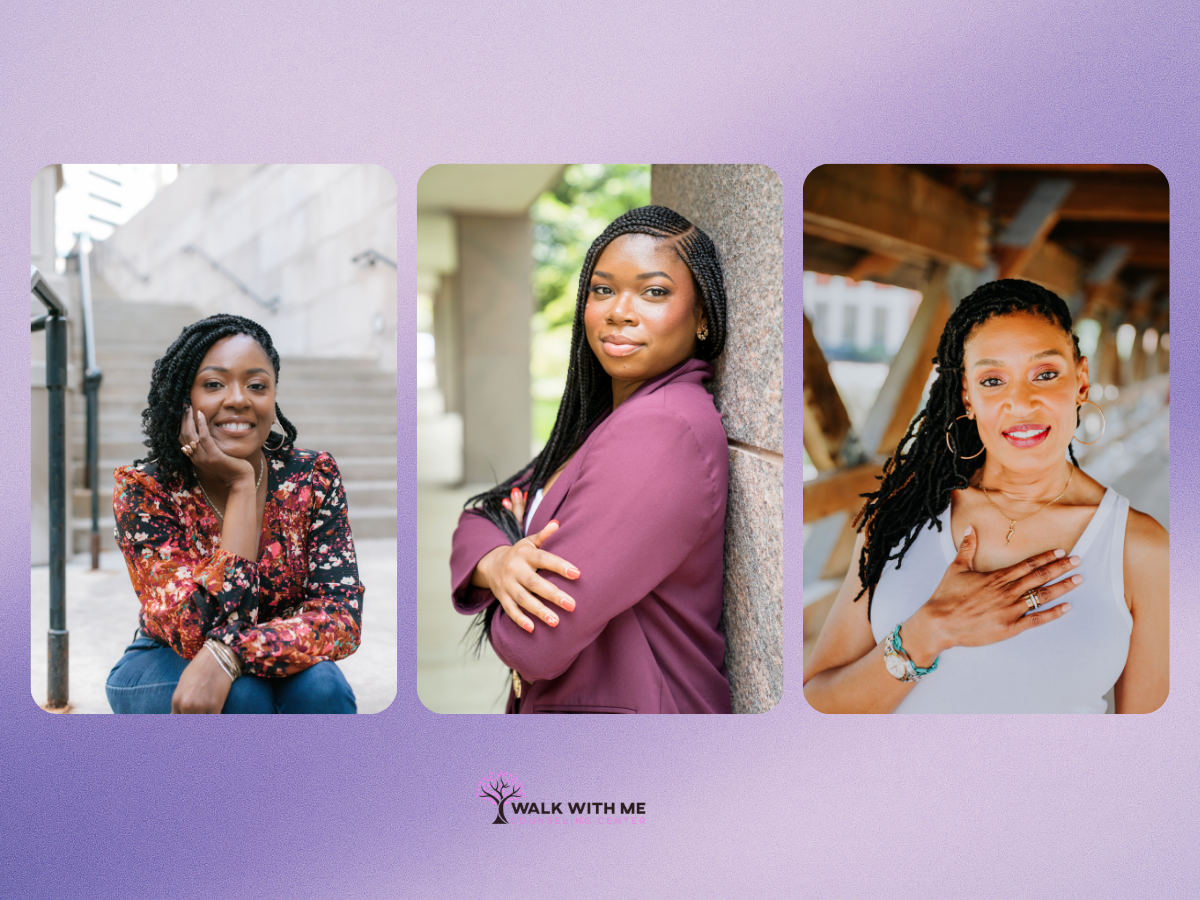
It's midnight and you're still replaying tomorrow's meeting for the twentieth time. Or you're standing in front of the mirror before a family gathering, giving yourself a pep talk you shouldn't need just to walk into the room. If either of those sounds familiar, you've probably typed some version of "best Black female therapist for anxiety in Chicago" into a search bar, hoping something on the page actually cuts through the noise.
Here's the honest answer: best is about fit, not a ranking anyone can hand you. But there are real, checkable things that make a practice a strong choice: whether the therapists are licensed in Illinois, whether anxiety is an actual named specialty, whether the practice actually understands what it's asking you to bring into the room, and whether they take your insurance. On every one of those, Walk With Me Counseling Center is worth a serious look.
In this article:
Culturally Responsive Care for Black Women in Chicago
Why Walk With Me Counseling Center
Our Approach to Anxiety Therapy
What Anxiety Actually Looks Like
What Changes With Anxiety Therapy
Insurance and Cost
Telehealth: How Sessions Work
Getting Started
FAQ
Culturally Responsive Care for Black Women in Chicago
Walk With Me Counseling Center was built by Black women who know what it's like to hold everyone else together and never get asked who's holding you, and to hesitate before ever picking up the phone to ask for help yourself. That's not a marketing line, it's the actual reason the practice exists. In session, that means you don't spend the first six months explaining what it's like to code-switch at work, carry a family's expectations quietly, or feel like asking for help is its own kind of failure. Your therapist already gets it, so the work can start where it actually needs to.
That approach extends past the therapy hour. The team looks at anxiety through mind, body, and, if it matters to you, spirit, the specific thoughts driving the worry, the physical tension anxiety leaves behind in your shoulders and jaw, and, for clients who want it, how faith fits into managing both. If the faith piece isn't for you, it's simply left out. Nothing about this practice assumes you're the same as the next person who walks through the virtual door.
Why Walk With Me Counseling Center
Every therapist on this team is licensed in Illinois, not a wellness coach with a nice Instagram. That distinction matters more than it sounds like it should. Licensure means ongoing education requirements, a board that can actually hold someone accountable, and a therapist qualified to treat an anxiety disorder, not just talk you through a rough week. Walk With Me Counseling Center is Black-owned, and Tasha Young holds an LCPC and is a National Certified Counselor. Deja Phillips and Veleka Avant are both Licensed Social Workers and Certified Alcohol and Drug Counselors. And if your anxiety traces back to something specific that happened to you, not just a brain that worries by default, the practice also offers EMDR and Brainspotting, not only talk therapy.
Our Approach to Anxiety Therapy
No two people get the same sessions here, because no two anxious brains got that way the same way. If your anxiety mostly lives in your thoughts, the constant replaying, the worst-case scripting, the team works in Cognitive Behavioral Therapy: catching the specific thought driving the spiral and building a truer one to stand in its place. If your anxiety runs more on habit than thought, sessions might lean on Dialectical Behavior Therapy or Motivational Interviewing instead, building the actual skills to sit with discomfort without letting it run your day.
And if your anxiety traces back to something that actually happened to you, a specific moment your body never fully let go of, talking it through in a CBT-style session isn't always enough. That's where EMDR or Brainspotting come in. Tasha Young, LCPC, is certified in EMDR, and Tasha Young and Veleka Avant, LSW, CADC, are both certified in Brainspotting. Neither one requires you to narrate the whole story out loud to get relief from carrying it. [Read more about how EMDR and Brainspotting compare →]
What Anxiety Actually Looks Like
About a third of U.S. adults experience an anxiety disorder at some point in their lives, according to the National Institute of Mental Health. It doesn't always look like worry you can name out loud. Sometimes it's a racing mind at 2 a.m. Sometimes it's the calls you let go to voicemail, the event you RSVP'd to and then canceled, a tight chest that shows up before you've even figured out why.
For some people, that's generalized anxiety. Your mind never fully leaves work, or money, or something you said three days ago that's still replaying. It follows you into the shower, into bed, into conversations that have nothing to do with any of it.
For others, it's social anxiety. Walking into a room feels louder than it should. You're running the math on every glance and every pause before anyone else even notices you're doing it.
And for some, it's panic attacks. No warning. Your heart takes off, your breath goes shallow, and for a few unbearable minutes your body is convinced something is actually wrong, even when nothing is.
Therapy for anxiety isn't about willing yourself to calm down. It's about helping your nervous system learn it doesn't have to stay on alert all the time.
What Changes With Anxiety Therapy
Progress with anxiety therapy is usually gradual, and it looks different for everyone. Clients describe sleeping more easily. Catching an anxious thought before it spirals, instead of getting swept into it. Making the phone call, taking the drive, showing up to the event that anxiety used to talk them out of.
There's no fixed timeline for any of that, and what it looks like for you is worth asking about directly in your free consultation, rather than guessing from a blog post.
Insurance and Cost
Sessions are $155, and Walk With Me Counseling Center is in-network with Blue Cross Blue Shield PPO, BCBS Medicare, Blue Cross Community Health Plans (Illinois Medicaid), and Aetna PPO. Self-pay is also available, along with HSA and FSA cards.
Your exact plan and specific therapist match get confirmed during your free consultation. Panel status can shift slightly by clinician, so we'll walk through exactly what applies to you. If you have Blue Cross Community Health Plans specifically, most members pay $0 out-of-pocket once that's verified. We're happy to check your specific benefits before you commit to anything. [See a full breakdown of what BCBS PPO coverage actually costs →]
Telehealth: How Sessions Work
Every session is virtual, from anywhere in Illinois. No commute, no waiting room, no using up your lunch break to sit in a parking lot before an appointment. Walk With Me Counseling Center offers day, evening, and weekend appointments, because anxiety doesn't clock out at 5 PM, and your options for treating it shouldn't either.
Getting Started
A free 15-minute consultation is the first step, no forms and no commitment. From there, you'll be matched with the right therapist on the team for your specific concerns and insurance, with coverage verified before your first paid session, so you know your real cost before you agree to anything
FAQ
-
Availability shifts, so a free consultation is the fastest way to get a real answer for your situation.
-
Yes. The practice is in-network with Blue Cross Blue Shield PPO, BCBS Medicare, Blue Cross Community Health Plans (Medicaid), and Aetna PPO, at $155 per session before insurance. Self-pay is also available. Your consultation confirms your specific plan and therapist match.
-
Because who's sitting across from you, even on a screen, shapes how safe it feels to say the hard thing out loud. A Black-owned, culturally responsive practice means you're not the first person your therapist has ever had to explain your specific context to.
-
No. The team welcomes any adult across Illinois, though the practice was built with culturally responsive care for Black clients specifically in mind.
-
That's common. Your free consultation is a low-pressure space to ask questions, with no obligation to continue afterward.
-
Yes, if you'd like. Your therapist can incorporate Scripture and prayer into your work together, it's entirely optional.
-
Not every therapist, but Walk With Me Counseling Center does offer both. Tasha Young, LCPC, is certified in EMDR, and Tasha Young and Veleka Avant, LSW, CADC, are both certified in Brainspotting. Your consultation will confirm your specific therapist match.
-
Your free consultation is where that gets decided. The team matches you with whichever therapist best fits your specific concerns, schedule, and insurance.
Ready to Talk to Someone Who Gets It?
Maybe it's midnight again and your mind is still replaying tomorrow. Maybe there's another family gathering coming up, and you're already rehearsing the pep talk you'll need just to walk through the door. A free 15-minute consultation with Walk With Me Counseling Center is the place to start turning that pattern into something different. No cost, no commitment, just a real conversation about what's been keeping your mind from settling down.
If you're in crisis or need help right now, call or text 988, the Suicide and Crisis Lifeline, or go to your nearest emergency room. Walk With Me Counseling Center provides ongoing therapy, not emergency or crisis services.