Loving Someone Who Doesn’t Love You Back: Why It Hurts and How to Heal
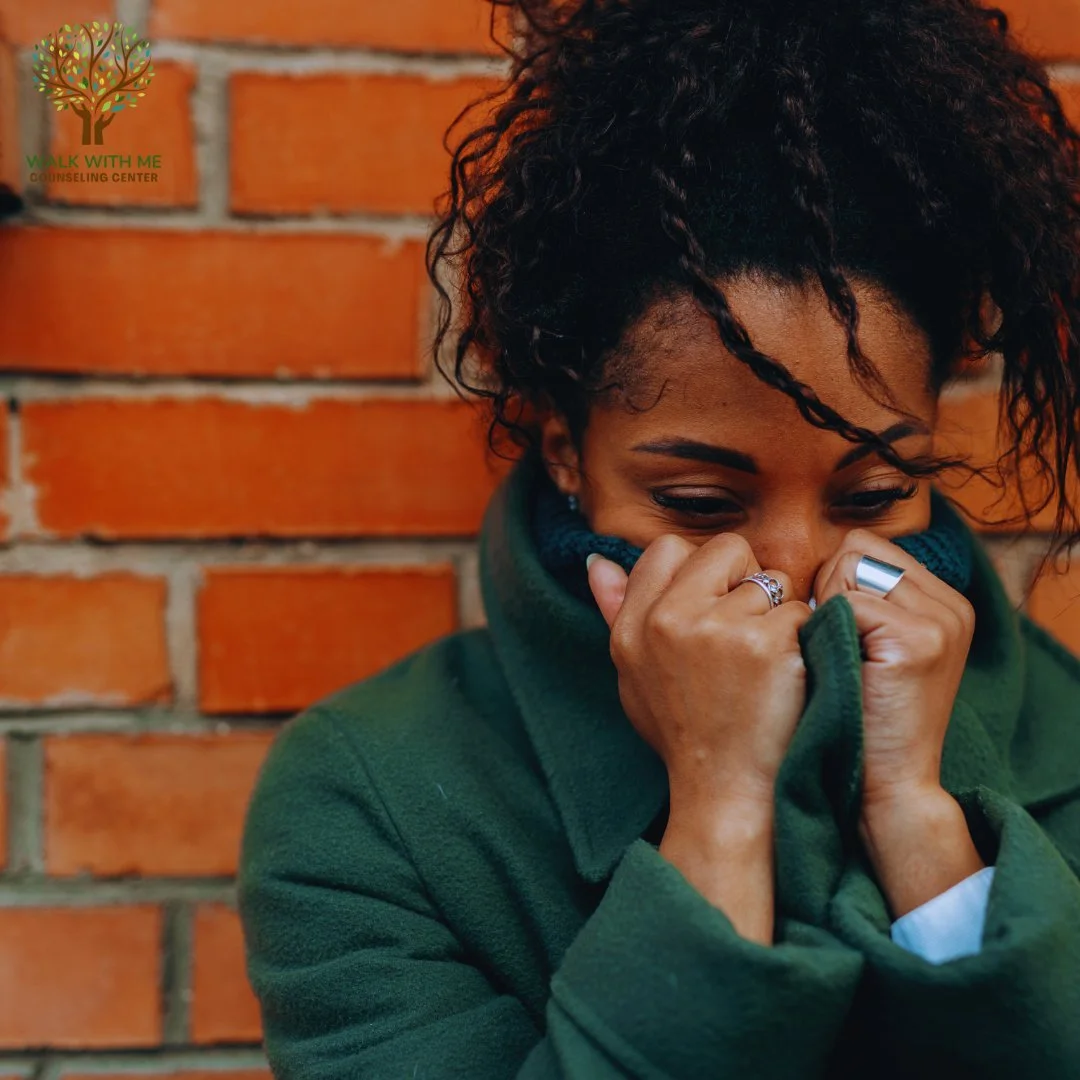
You check your phone for the tenth time today. Nothing. You replay your last conversation in your head, analyzing every word, looking for signs you might have missed. You know they don't feel the same way. But you can't stop thinking about them. Your chest feels tight. Your stomach drops every time you see their name.
You tell yourself to move on. You know this isn't going anywhere. But your brain won't let go. And every time you see them, talk to them, or even think about them, you feel that pull all over again.
Many people we work with in therapy across Illinois describe feeling stuck in this exact place. They're in love with someone who doesn't love them back. And they feel ashamed for not being able to just get over it.
If this is you, we want you to know something. You're not weak. You're not pathetic. And there's a reason this hurts so much and feels so hard to let go of.
Signs You're Emotionally Stuck on Someone Who Doesn't Love You
Before we get into the psychology of why this happens, it helps to recognize it clearly. Sometimes the hardest part is admitting to yourself that you're stuck. These signs aren't judgments. They're patterns. And patterns can be changed.
1. You analyze every interaction looking for hidden meaning. You replay conversations. You take screenshots of their texts and read them again. You Google "what does it mean when someone does this." This happens because your brain is trying to solve an unsolvable problem. It's looking for certainty where there isn't any, and the uncertainty keeps you looping.
2. You make excuses for why it hasn't worked out yet. They're going through something. The timing is off. They just need more time. These may all be true. But if you've been waiting months or years for the timing to shift, the excuse has become the story you're telling yourself to stay attached.
3. You compare every potential partner to them. You go on a date and spend most of it thinking about how this person compares. Nobody quite measures up. This is a sign that the fantasy has taken over. You're not evaluating real people. You're evaluating them against an idealized image.
4. You feel a physical reaction when their name comes up. Your stomach drops. Your heart speeds up. You feel a rush when they reach out and a crash when they don't. That physical response is your nervous system responding to an unpredictable attachment figure, the same way it would with any inconsistent source of comfort or reward.
5. You've pulled back from your own life. You've stopped doing things you used to enjoy. Social events feel pointless. You're waiting, even if you can't name exactly what you're waiting for. One-sided love has a way of shrinking your world down to one person.
6. You keep imagining a future that doesn't exist yet. You picture what it would be like if they finally came around. You've planned versions of conversations you haven't had. You've imagined how you'd tell people the story of how it finally happened. The future you're living in emotionally doesn't match the reality in front of you.
7. You feel like you just need one more chance to show them. If you could just say the right thing, do the right thing, be the right version of yourself, they'd finally see it. This belief is painful because it keeps you in performance mode. It also quietly tells you that you're the problem, which isn't true.
8. You hold on to small moments like they're evidence. A lingering look. A text they didn't have to send. A moment where it felt mutual. You return to these moments again and again as proof that something is there. Holding onto small moments as evidence is a sign that your brain is working hard to stay hopeful in the absence of real reciprocity.
9. You feel worse when you try to move on, not better. You try to stop thinking about them. You tell yourself it's over. You almost convince yourself. Then something small happens — a song, a place, their name — and you're back at square one. This isn't a weakness. It's a sign that the attachment hasn't been processed yet.
Why Your Brain Gets Hooked
When you have feelings for someone, your brain releases dopamine — the chemical most associated with reward, motivation, and pleasure. It's the same system that fires when you eat something delicious, win something unexpected, or get a notification you were hoping for. Dopamine doesn't just respond to good things happening. It responds most powerfully to the possibility that something good might happen.
In a mutual relationship, that dopamine response is relatively steady. They text back. You spend time together. There's consistent warmth and interest. Your brain registers that this person is available and connected to you, and the reward system settles into a pattern.
In one-sided love, none of that consistency exists. What happens instead is intermittent reinforcement. One day, they're warm and engaging. The next time they're distant. A moment of real connection happens, then nothing for a week. A smile, a text, a conversation that feels like it means something — and your brain lights up. Then silence. And your brain starts chasing the next signal.
Psychologists have studied intermittent reinforcement for decades. Unpredictable rewards are significantly more compelling than predictable ones. It's the same mechanism behind gambling. You keep pulling the lever, not because you always win, but because you might. And the uncertainty actually strengthens the behavior rather than discouraging it.
There's also a term worth knowing: limerence. It describes an intense, intrusive, involuntary attachment to another person — characterized by obsessive thinking, emotional dependency on their perceived feelings, and a desperate need for them to reciprocate. Limerence isn't just a crush. It feels consuming. And it can persist long after you logically know the situation isn't going anywhere. If what you're experiencing feels more like an obsession than a preference, limerence may be what's happening.
Uncertainty amplifies all of this. When we don't know where we stand, our brains stay on high alert, scanning for any new information. That vigilance is exhausting. And it keeps you emotionally tethered to a situation that isn't giving you what you need.
You're not irrational. Your brain is doing exactly what brains do when they're attached to an unpredictable source of connection. Understanding that doesn't make the feelings disappear. But it makes them make sense.
You're in Love With the Potential
Here's something that's hard to admit. Often, you're not actually in love with the real person. You're in love with who you think they could be.
You imagine what a relationship with them would be like. How they'd treat you. What you'd do together. How happy you'd be. You fill in all the blanks with the best possible version of them.
And because they're not actually dating you, they never disappoint that fantasy. They never leave their socks on the floor, forget your birthday, or snap at you when they're stressed. In your mind, they're perfect. Or at least, they could be perfect if they'd just give you a chance.
The fantasy feels safe. Real. Almost more real than actual relationships you've had. Because you get to control it. You get to imagine them loving you exactly the way you need to be loved.
But that version of them doesn't exist. And staying attached to the fantasy means you're not dealing with reality.
There's No Closure
When someone breaks up with you, it hurts. But at least there's an ending. A clear "this is over." You can start grieving and eventually start moving on.
With unrequited love, there's no clean ending. They didn't break up with you because you were never together. They might not even know how you feel. Or if they do know, they haven't explicitly rejected you. They're just... not interested.
So your brain keeps looking for answers. You replay every conversation. You analyze every interaction. Did I say something wrong? Was there ever a chance?
And without closure, it's really hard to move forward.
When It Hits an Old Wound
Sometimes, unrequited love hurts extra deep because it's not just about this person. It's about an old pattern.
If you grew up feeling like you had to earn love, like affection was conditional or inconsistent, your brain might have learned that love is something you chase. That if you just try hard enough, prove yourself enough, you'll finally be chosen.
Attachment theory helps explain this. The way we learned to connect with early caregivers shapes how we attach to people as adults. If love felt unpredictable or something you had to work for as a child, emotionally unavailable people can feel strangely familiar as an adult. Not comfortable exactly. But known.
So when you meet someone who's emotionally unavailable or indifferent, it doesn't feel wrong. It feels familiar. And part of you thinks if you can just get this person to love you, it will heal something from your past.
But it won't. You can't heal old attachment wounds by repeating the same pattern with someone new. You just end up hurting yourself more.
Why Can't YOU Just Try Harder
One of the most painful beliefs in one-sided love is "if I just try harder, they'll see me."
If you're just a little more attractive, more interesting, more supportive, more understanding, more patient, they'll finally realize what they're missing. They'll choose you.
But love doesn't work that way. Love isn't a prize you win by being good enough. It's a mutual connection between two people who genuinely want to be together.
When someone doesn't choose you, it's not because you're not enough. It's because they're either unable or unwilling to meet you where you are. Maybe they're not ready for a relationship. Maybe they're interested in someone else. Maybe they just don't feel that way about you.
And none of that is a reflection of your worth.
Your feelings are real. Your love is real. But your feelings alone don't create a relationship. Both people have to want it. And when one person doesn't, no amount of effort will change that.
What Letting Go Actually Looks Like
Letting go of someone who doesn't love you back is one of the hardest things you'll do. Because it's not just letting go of them. It's letting go of hope. The dream of what could have been. The version of yourself that finally gets chosen.
Start by being honest about what you're really craving. Is it this specific person? Or is it the feeling of being wanted, chosen, loved? Often, unrequited love is about needing validation more than it's about the actual person.
Stop feeding the fantasy. Every time you imagine scenarios with them, you're reinforcing the attachment. When you catch yourself daydreaming, redirect your thoughts. It sounds simple, but it's powerful.
Get distance if you can. If you see them every day, that makes it harder. If you can limit contact, even temporarily, it gives your brain space to start detaching.
Talk to someone you trust about what's really going on. Keeping it inside makes it bigger. Saying it out loud to someone who cares about you helps you see it more clearly.
And consider working with a therapist. Especially if you notice you keep falling for unavailable people. That pattern often has roots that need to be addressed.
Pause and Reflect
Before you keep reading, sit with these questions for a moment. You don't have to answer them perfectly. Just notice what comes up.
Am I in love with this person, or am I in love with how I imagine they'd make me feel?
Is this the first time I've felt this way about someone who couldn't meet me where I was?
What am I afraid will happen if I actually let this go?
What have I put on hold in my own life while I've been waiting?
If a close friend described this situation to me, what would I tell them?
What You Deserve
You deserve love that loves you back. Not love you have to chase. Not love you have to earn. Not love that keeps you guessing, hoping, or waiting.
You deserve someone who sees you and chooses you without hesitation. Someone who meets your effort with their own. Someone who doesn't make you feel like you're too much or not enough.
That kind of love exists. But you won't find it while you're pouring all your energy into someone who can't or won't receive it.
The love you're offering them? You still have it. And you can give it somewhere it will actually grow. Starting with yourself.
Repeatedly finding yourself attached to people who can't meet your emotional needs is worth paying attention to. It's not a character flaw. It's a pattern. And patterns have origins. Understanding yours is how you stop repeating it.
Frequently Asked Questions About Unrequited Love
Can you love someone who doesn't love you back?
Yes, and it's more common than most people admit. Love doesn't require reciprocity to be real. Your feelings are genuine, even when they're one-sided. What makes unrequited love so painful is that the emotion is real, but the relationship isn't. You're experiencing something your brain registers as a real attachment, with all the neurological and emotional weight that comes with it, without the stability or connection that a mutual relationship would provide. Acknowledging that your love is real while also accepting that it can't grow in this direction is one of the hardest and most necessary things you can do.
Why can't I stop thinking about someone who doesn't love me?
Because your brain is caught in an intermittent reinforcement loop. When connection is unpredictable, your brain stays on high alert, watching for signals and replaying every interaction for meaning. Dopamine fires most strongly in response to uncertainty, which means the less consistent someone is, the more mental space they tend to occupy. Add in the fact that there's no clear ending or closure, and your brain has nowhere to land. It keeps searching. That's not a personal failing. It's neuroscience.
How do I stop loving someone who doesn't love me?
There's no shortcut, but there is a process. Start by reducing contact as much as your situation allows. Stop feeding the fantasy by catching yourself in imagined scenarios and redirecting. Get honest about whether you're attached to this person or to the idea of finally being chosen. Talk to someone you trust. And if you keep finding yourself here, in one-sided attachments that consume you, working with a therapist can help you understand what's underneath the pattern and start changing it. Healing this isn't about willpower. It's about understanding and, over time, building something different.
Is unrequited love a trauma bond?
Not always, but sometimes it overlaps. A trauma bond typically forms in relationships where there is actual abuse or harm, combined with cycles of tension and relief that create intense attachment. Unrequited love shares some features with trauma bonding, particularly the intermittent reinforcement and the way small moments of connection feel disproportionately significant. If the person you're attached to has been hot and cold, manipulative, or has put you through emotional highs and lows, the attachment you're feeling may have trauma bond characteristics worth exploring with a therapist.
How long does it take to get over someone?
There's no universal timeline, and anyone who gives you one is guessing. What affects the timeline is the length and depth of the attachment, whether there are underlying patterns at play, how much contact you continue to have with the person, and whether you're actively working to process the feelings. For some people, it takes months. For others, it takes longer, especially if the attachment is connected to earlier wounds. What tends to slow it down most is continuing to feed the hope. What tends to speed it up is honest self-reflection, real support, and understanding why you got so attached in the first place.
Is it normal to still love someone after rejection?
Yes. Rejection doesn't turn feelings off. In fact, for many people, an explicit rejection intensifies feelings temporarily because the brain responds to loss with a sense of urgency. The finality of rejection can actually increase desire before it decreases it. Over time, with distance and honest processing, feelings do shift. But expecting them to disappear immediately after a rejection is unrealistic. Be patient with yourself while also being honest about whether you're doing things that keep the attachment alive.
Can therapy help with unrequited love?
Therapy is particularly useful when unrequited love isn't a one-time experience but a recurring pattern. If you keep finding yourself attached to people who can't or won't reciprocate, that pattern usually points to something worth exploring. A therapist can help you understand your attachment style, identify what draws you to emotionally unavailable people, process the grief of letting go, and build the self-worth to make different choices. You don't have to be in crisis to benefit from therapy. Feeling chronically stuck in one-sided love is reason enough to reach out.
Why do I keep hoping they'll change their mind?
Because your brain is wired to look for possibilities, especially when there has been any inconsistency in someone's behavior. If they've ever shown warmth, interest, or connection, your brain files that away as evidence that the outcome could be different. Hope is also a way of delaying the grief of letting go. As long as you're hoping, you don't have to feel the loss. But hope that isn't grounded in reality keeps you in a holding pattern. The question isn't whether they might change. It's whether you can afford to keep waiting for something that may never come.
Getting Support
If you're stuck in one-sided love, keep choosing people who don't choose you back, or are ready to break this pattern but don't know how, therapy can help.
At Walk With Me Counseling Center, we work with adults across Illinois through online therapy who are navigating unrequited love and trying to understand why they keep ending up in these situations.
Deja Phillips, LSW, CADC, specializes in exactly this kind of work. Deja works with adults who are healing from attachment wounds, relationships with emotionally unavailable partners, unhealthy relationship cycles, emotional abuse, and trauma. She understands that the pattern of loving people who can't love you back rarely starts with the current person. It usually starts somewhere earlier. Her work helps you trace that history, understand how it's shaping your choices, and build the self-awareness and self-worth to do something different.
Our therapists are culturally responsive and trained to help you process your grief, understand your patterns, and build a foundation for choosing differently.
We offer free 15-minute consultations so you can talk through what's going on and see if therapy feels like the right fit. We provide virtual therapy throughout Illinois and accept BCBS PPO, BCBS Community Health Plan (Medicaid), Aetna PPO, and self-pay. If you're unsure whether your plan is accepted, our team is happy to help you verify your benefits before your first appointment.
Ready to stop the cycle? Schedule a free 15-minute consultation with Deja at Walk With Me Counseling Center.
Loving someone who doesn't love you back doesn't mean your heart is the problem. It may mean you've been caught in a relationship pattern that's painful but changeable. When you understand why you become attached to emotionally unavailable people, you can begin making different choices. Healing isn't about becoming someone else. It's about learning to choose relationships where your love is returned