Why Seeing Government Violence and Injustice Is Triggering Anxiety and Hopelessness
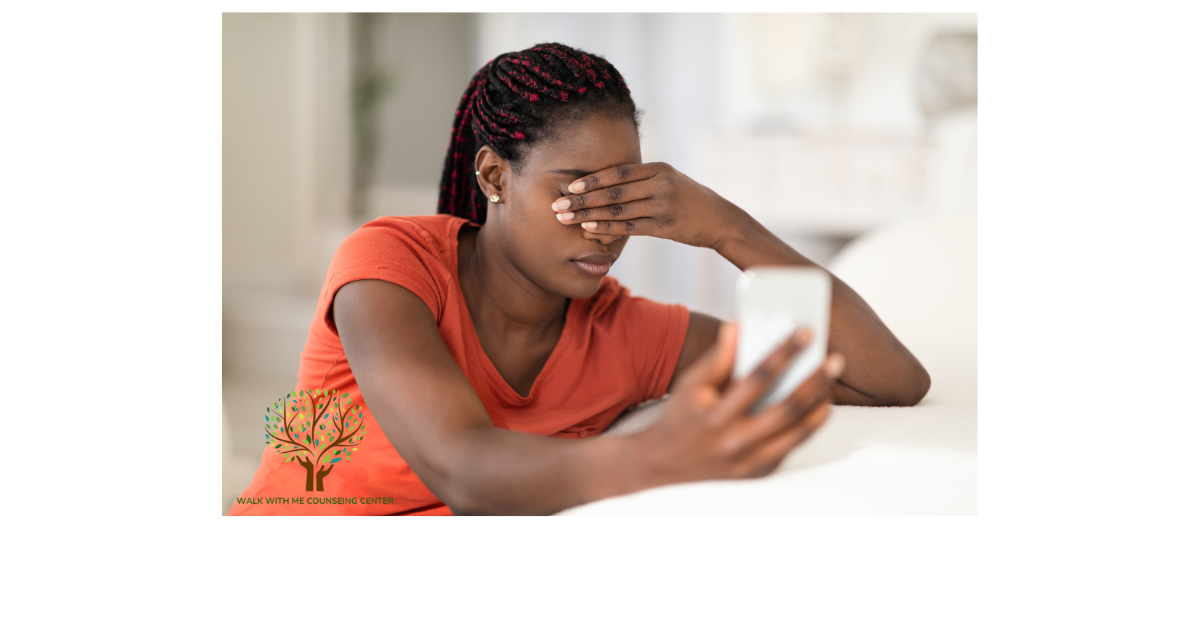
If you've been feeling heavier than usual, more anxious, emotionally drained, or quietly hopeless, you're not imagining it.
Many people are struggling right now, not because something is wrong with them, but because of what they're being asked to witness over and over again. Videos of people being harmed. Stories of government actions that feel aggressive and unchecked. Images of real human suffering showing up in social media feeds with no warning and no space to process.
For a lot of people, this doesn't feel like news anymore. It feels personal. It feels unsafe. It feels like the world is unraveling.
And that reaction makes sense.
Your body is responding to what it perceives as a real and ongoing threat.
This Is Traumatizing Even If It Didn't Happen to You
Trauma is not only something that happens directly to us. It can also happen through repeated exposure to violence and injustice, especially when it involves systems of power.
When you see people being detained, harmed, or killed by government authorities, your nervous system doesn't pause to analyze policy or politics. It responds to threat.
Your body asks one simple question: Am I safe?
When this happens again and again, the nervous system stays activated. Not in constant panic, but in a chronic state of alert. Braced. Waiting. Tired.
This is why so many people are experiencing anxiety that feels constant, trouble sleeping, emotional numbness, irritability, difficulty concentrating, and a deep sense of dread about the future.
This is not a weakness. This is a human nervous system responding to repeated signals of danger.
Why This Hits the Black Community Differently
There's another layer here that needs to be named.
For Black people, watching violence carried out by the government or sanctioned systems is not abstract. It's historical. It's embodied. It's triggering in ways that are deeply rooted in lived experience and collective memory.
When Black people see state violence, it doesn't land as an isolated incident. It echoes generations of harm, surveillance, and loss. It reminds us that safety has never been evenly distributed. That citizenship has not always meant protection. That being told to stay calm or trust the system has often come at a cost.
So when Black people feel heightened anxiety, anger, grief, exhaustion, or despair right now, it's not an overreaction. It's the body remembering.
At the same time, this moment is affecting people from many backgrounds. For some non-Black people, this may be the first time the illusion of safety has cracked. For others, it creates moral injury—the pain of witnessing injustice and feeling powerless to stop it.
Different histories. Shared nervous system impact.
What differs is not the level of pain, but the pathways through which it enters the body.
Naming Reality Is Not Unprofessional
We want to say this clearly as therapists: naming injustice is not unprofessional. Feeling anger about harm is not unhealthy. Struggling emotionally in the face of violence is not a personal failure.
These are sane responses to a harmful environment.
Therapy is not about adapting people to harm. It is about helping people survive it with their humanity intact.
At Walk With Me Counseling Center in Chicago, Illinois, we understand that anxiety and depression don't exist in a vacuum. They're shaped by personal history, collective trauma, and the realities of living in a society where safety is unevenly distributed.
We're a Black-owned practice, and we hold space for the ways racialized stress, injustice, and historical trauma affect mental health. At the same time, we welcome all people who are struggling to stay grounded, connected, and whole in an overwhelming world.
When the World Feels Unsafe, Relationships Suffer Too
This kind of stress doesn't stay contained inside your thoughts. It shows up in your relationships.
You might notice more conflict. Less patience. A shorter fuse. Pulling away instead of talking. Feeling disconnected from people you care about. Or feeling like you don't have the energy to explain yourself anymore.
When the nervous system is overwhelmed, connection becomes harder. Not because love is gone, but because survival has taken over.
Many people we work with in therapy across Illinois come in thinking their relationship is the problem, when in reality, unprocessed stress and fear have quietly taken over the space where safety used to live.
What Hope Actually Means Right Now
Hope doesn't mean pretending things are fine.
Hope is not ignoring what's happening or forcing yourself to stay positive.
From a therapeutic perspective, hope is about grounding. It's about helping your nervous system feel safe enough to come out of survival mode so you can think clearly, feel again, and make intentional choices.
Hope looks like learning how to calm your body when your mind will not slow down. Setting boundaries with news and social media that keep flooding your system. Understanding your reactions instead of judging them. Rest, support, and connection.
Hope is not a big breakthrough. It's a series of small stabilizing moments that remind your body you're safe right now.
What We Often Tell People
You're not broken for feeling overwhelmed by what you're seeing.
Your reactions make sense given what you've been exposed to.
You're allowed to care without consuming everything.
You're allowed to protect your mental health without minimizing reality.
You don't have to figure out the future today.
These aren't platitudes. They're grounding truths that help the nervous system settle.
Getting Support
Maybe this shows up for you as anxiety you can't shake. Maybe it's depression or emotional numbness. Maybe it's tension in your relationships. Maybe it's a quiet sense of hopelessness you don't say out loud.
You don't have to carry this alone.
At Walk With Me Counseling Center, we work with people across Illinois through online therapy who are navigating anxiety, trauma exposure, relationship strain, and emotional exhaustion. We understand how current events, systemic injustice, and collective trauma affect individual mental health.
We offer free 15-minute consultations so you can talk through what's going on and see if therapy feels like the right support. Many people use insurance to make therapy more accessible, and we work with BCBS PPO and Aetna PPO.
Therapy is not about fixing you. It's about helping your nervous system breathe again so you can reconnect with yourself, your relationships, and what still matters.
You deserve support in times like these. You deserve space to tell the truth about how hard this feels. And you don't have to walk through it alone.